Bee Bunkers
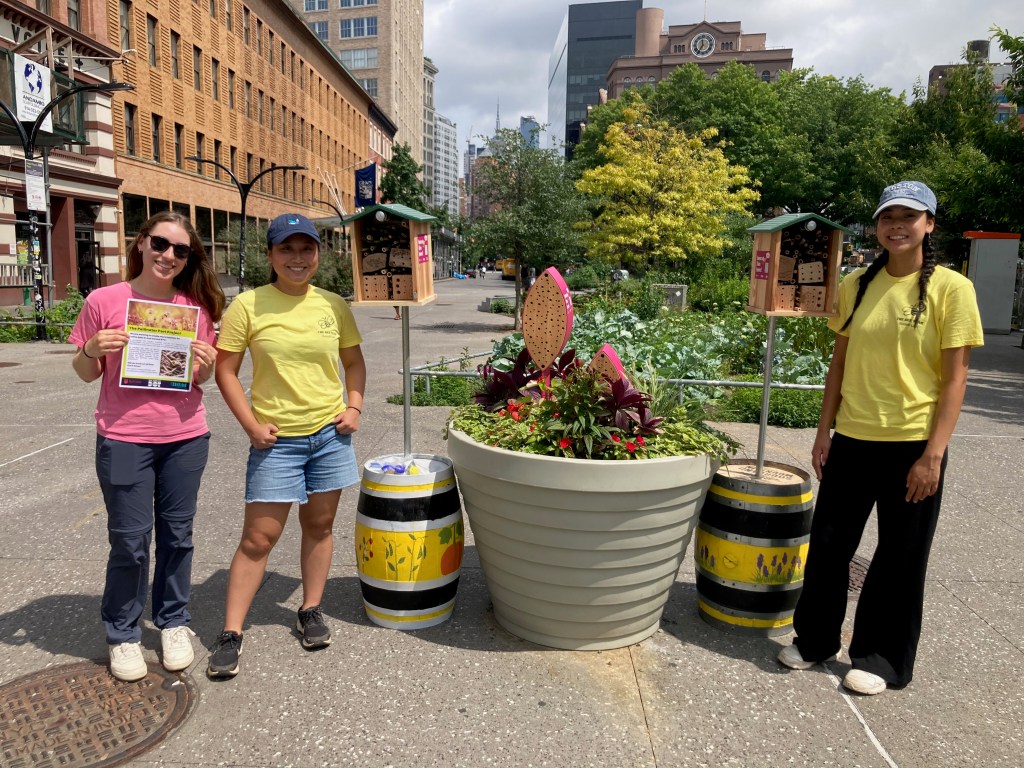
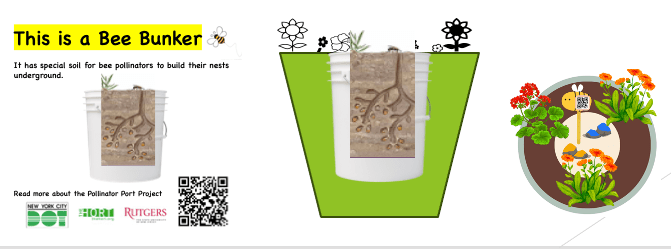
As a majority of native bees build their nests in the ground, and bare ground is extremely limited in cities, our challenge was to find a way to create a functional resource for these soil nesters. After significant literary research, we decided to trial a design that would allow us to make use of the extra-large planters provided & managed by The Horticultural Society of NYC (The Hort). Our Bee Bunkers are six gallon plastic buckets, modified to promote drainage, filled with a soil type that should appeal to a variety of ground nesting species (sandy loam). The soil has relatively high sand content and is mostly inhospitable to plants. The high drainage and low ground cover make this type of soil the ideal type for ground-nesting bees, who would rather not live in flooded homes or have to deal with invading roots. We submerge the Bunkers in the center of the planters, so they can be surrounded by plants that will provide food and also be buffered against the cold in winter. We add in some small painted rocks to both catch the attention of foraging bees, but also serve as landmarks to help the bees locate the entrance to their nests.
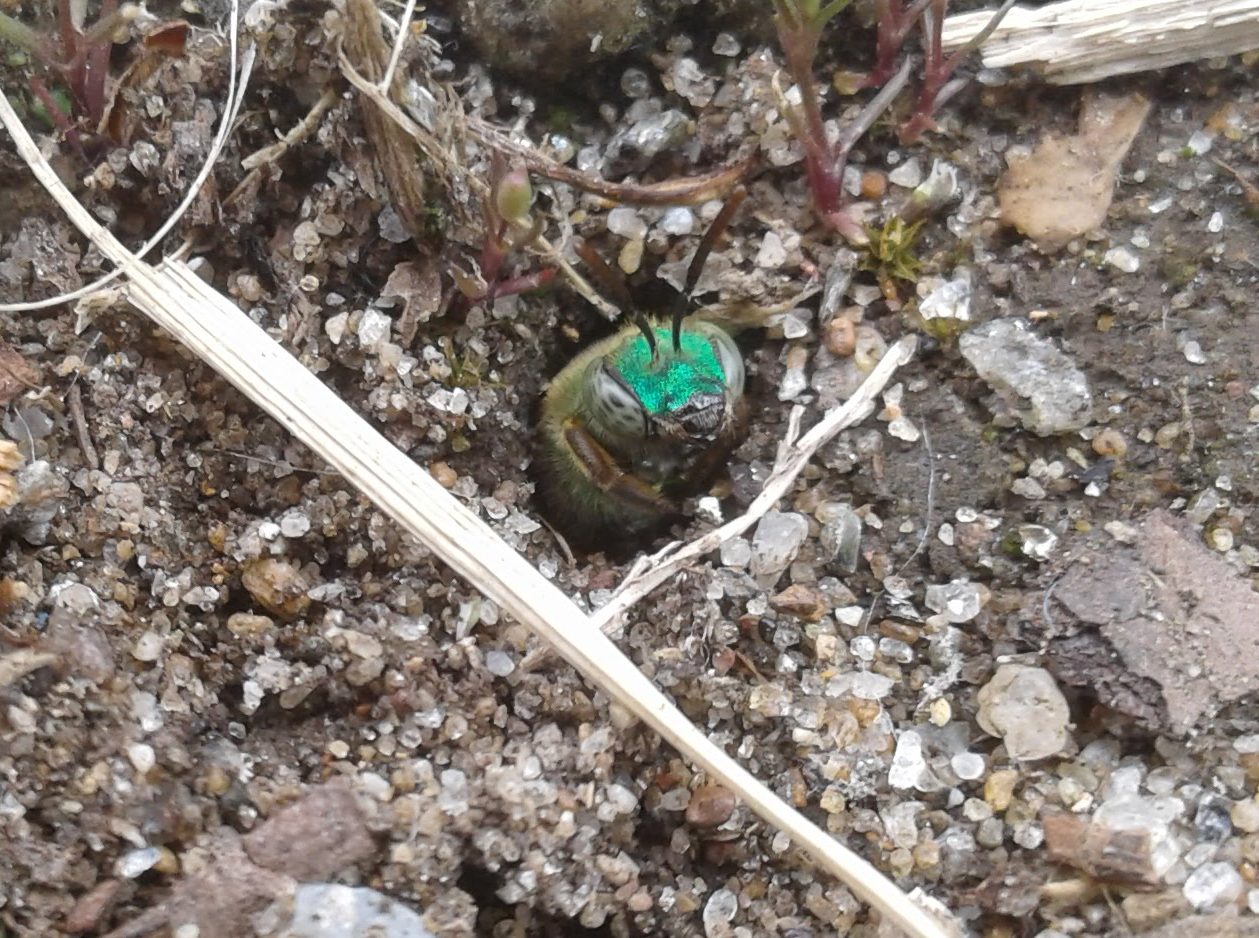
Female ground-nesting bees dig holes in the ground, where they will lay eggs in excavated brood chambers. Some bees have only one brood chamber per hole, while most have several. Each chamber has a ball of pollen for the larvae to eat. Baby bees will stay in their nests throughout the winter, only emerging when the flowers start blooming and they are ready to fly.
Bee Hotels
The other 30 to 40% of bee species build their nests in cavities and stems and although city bees are quite crafty in finding and making use of available cracks and crevices, they also need our support to maintain healthy populations. Bee hotels have been a staple in garden centers for some time, but the reality is that they are really only needed in very human-dominated areas like town centers and cities. Our bee hotels are somewhat similar to the ones you can buy commercially, with some science-informed modifications and adapted for urban environments. Our hotels consist of a combination of resources, ranging from reeds and stems (from gathered bamboo, Phragmites, blackberry, etc.) and wooden blocks with pre-drilled holes. Some bees like to excavate, while others prefer pre-made holes. Most cavity nesting bees prefer the latter, choosing holes around their own size which ranges drastically depending on species. To accommodate them all, we drill varied sizes to provide for a diversity of bees.

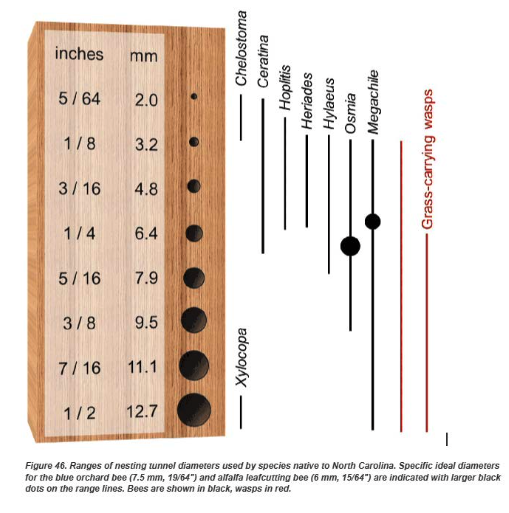
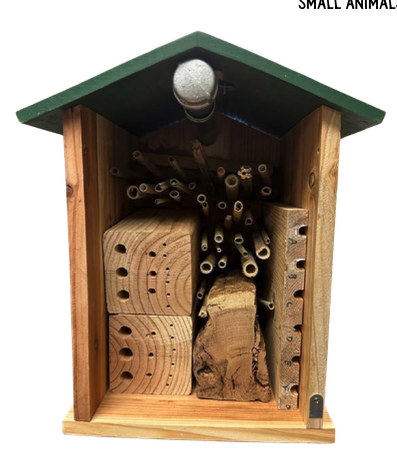
Our preliminary instructional (draft version) for how we make our bee hotels can be found below:
 The BEE Team at Rutgers